Industry background
In smart factories, machine vision inspection cameras (GigE Vision), PLCs and sensor networks have much higher requirements for bandwidth, latency and anti-electromagnetic interference than ordinary office networks; the problem of bit errors in copper cables near frequency conversion cabinets is prominent.
Customer pain points
- The vision camera has multiple 10 Gigabit channels running concurrently, and ordinary network cards lose frames, resulting in missed detections;
- Industrial computer PCI-E slots and power consumption are limited, so a low-consumption multi-port solution is needed;
- The 485 bus crosses the workshop, causing great interference and insufficient distance;
- Xinchuang requires the use of domestic chip network equipment.
Recommended product portfolio
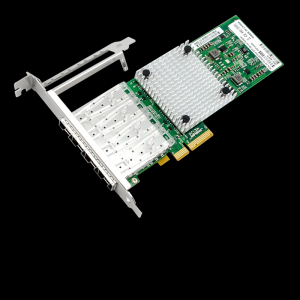
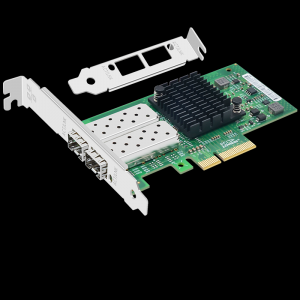
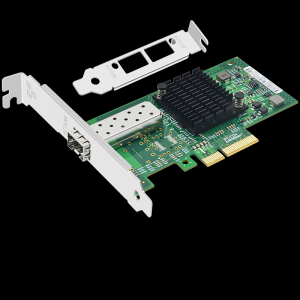
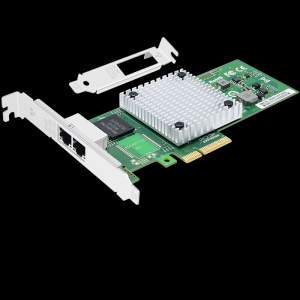
- PCI-EX4 Gigabit single/dual/quad optical port network card (Intel I350), optical port isolation workshop interference;
- PCI-EX8 10 Gigabit dual optical port network card (Intel 82599/X710) undertakes multi-channel vision cameras;
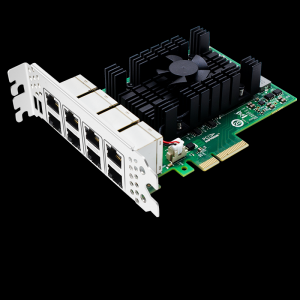
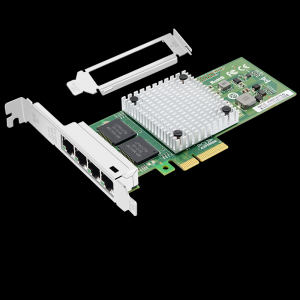
- PCI-EX4 Gigabit eight electrical port network card (I350), a single card is connected to the sensor network of the entire machine;
- Domestic 1860 series Gigabit dual/quad electrical port network cards meet the requirements of Xinchuang;
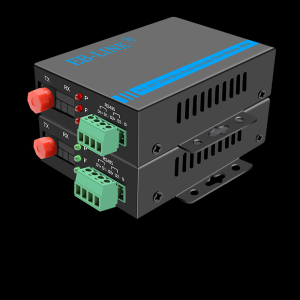
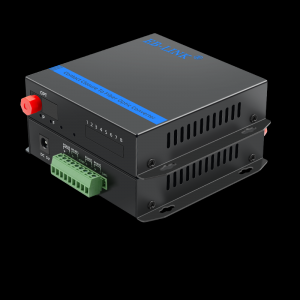
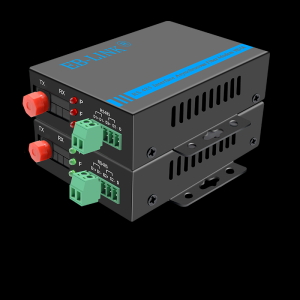
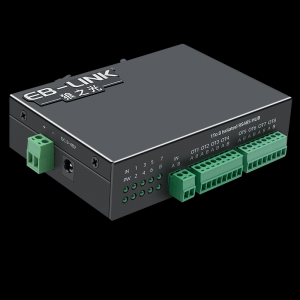
- 1/2/4-way bidirectional RS485 data optical transceiver and industrial-grade 8/16-port 485 hub.
Solution value
- Optical fiber media completely avoids electromagnetic interference from frequency converters and welding machines;
- Multi-port high-density access reduces slot occupation;
- 485 optical transmission can reach a single segment of 20km, and the bus bit error rate is reduced by an order of magnitude;
- The domestic chip series has passed the Xinchuang catalog adaptation verification.
Service guarantee
Provide driver compatibility list (Windows/Linux kernel version) and production line pilot prototype testing support.